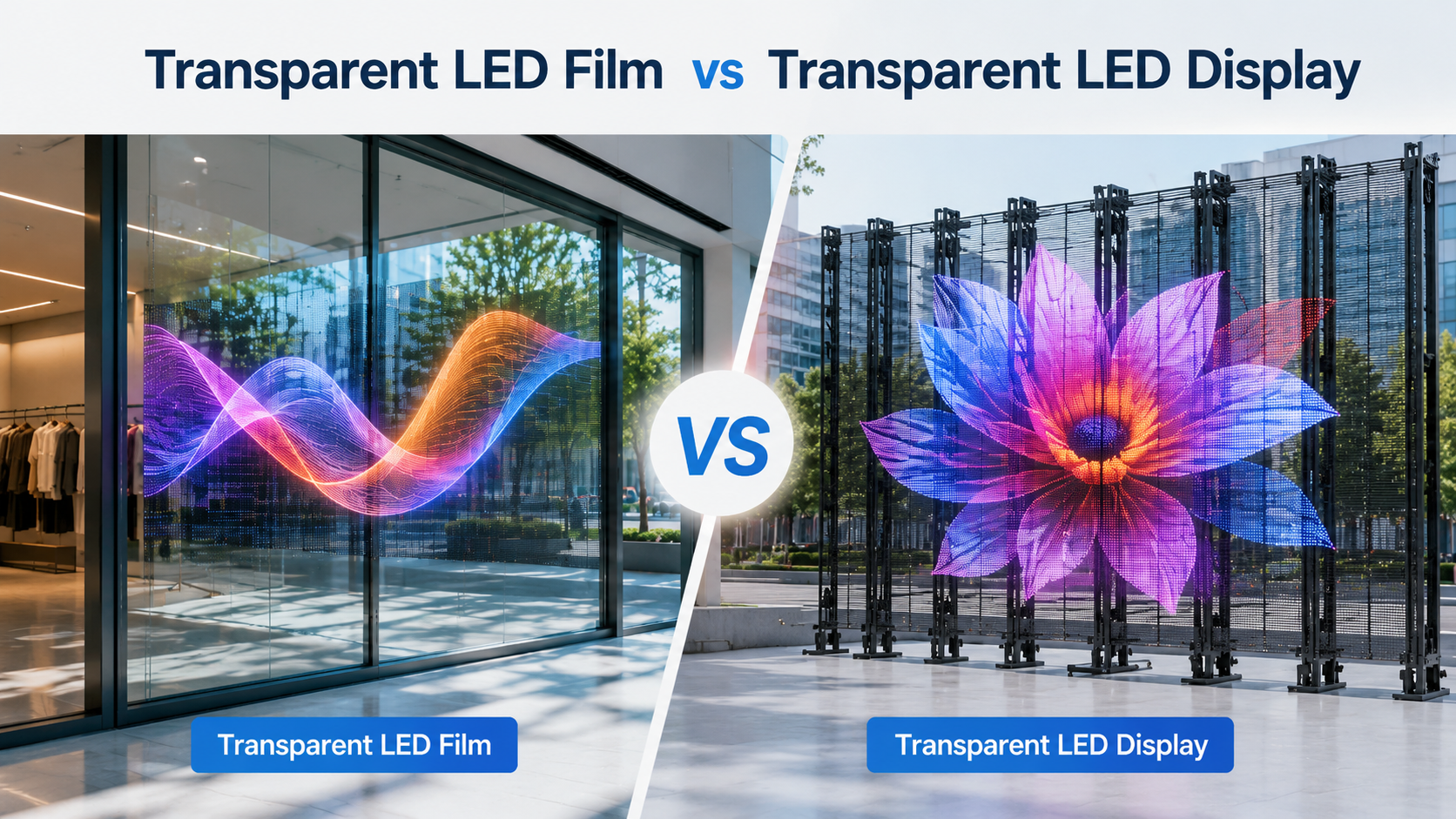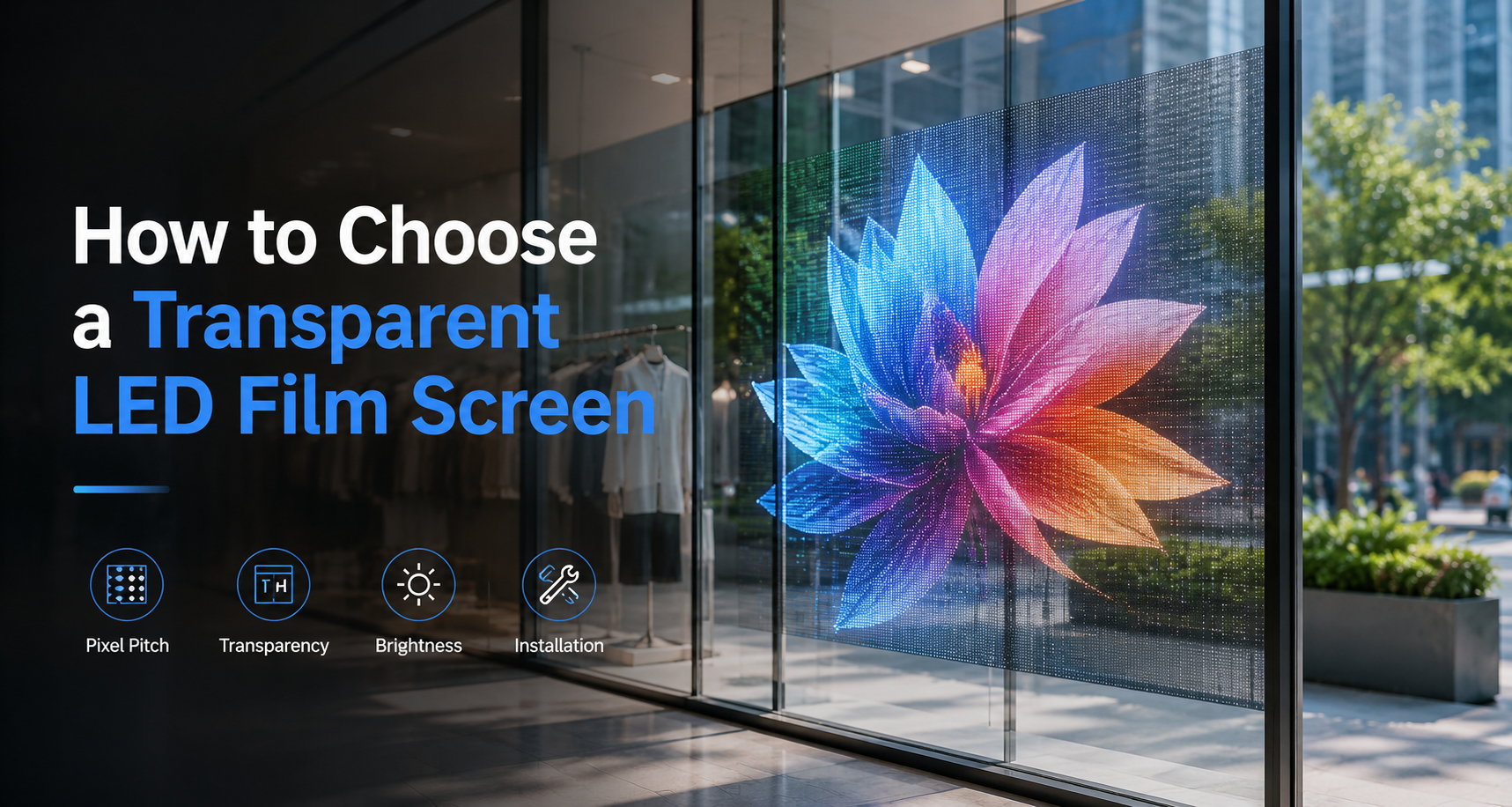
Transparent LED film screens are becoming an increasingly popular solution for businesses that want to display dynamic digital content on glass surfaces without completely blocking the view behind them.
Unlike traditional LED displays, a transparent LED film screen can be applied to or installed on glass windows and other transparent surfaces, making it suitable for retail stores, shopping malls, commercial buildings, showrooms, airports, museums, and advertising applications.
However, choosing the right transparent LED film screen is not simply about selecting the highest resolution. Factors such as pixel pitch, transparency, brightness, viewing distance, installation method, screen size, content requirements, and maintenance all affect the final performance.
Consider Where the Transparent LED Film Screen Will Be Installed
Different environments have different requirements.
For example, a retail store window may prioritize high brightness and good transparency, while an indoor showroom may place more emphasis on image quality and close viewing.
Before selecting a product, consider:
- Indoor or outdoor installation
- Glass type and structure
- Available installation space
- Viewing distance
- Ambient lighting
- Required screen size
- Accessibility for maintenance
Understanding the installation environment will help you avoid choosing a screen that is either underpowered or unnecessarily expensive.
Choose the Right Pixel Pitch
Pixel pitch is one of the most important specifications of an LED display.
It refers to the distance between two adjacent LED pixels. A smaller pixel pitch generally provides higher pixel density and better image detail at close viewing distances.
Common pixel pitches for transparent LED film screens may include:
- P2.5,P3,P4,P5,P6,P8,P10
The right choice depends largely on viewing distance.
Close Viewing
If customers will stand relatively close to the glass, a smaller pixel pitch can provide a smoother and more detailed image.
Medium Viewing Distance
For shopping malls, retail stores, and commercial spaces where viewers are several meters away, a medium pixel pitch may provide a good balance between image quality and cost.
Long Viewing Distance
For large windows or advertising applications viewed from a distance, a larger pixel pitch may be sufficient.
The smallest pixel pitch is not always the best choice. The goal is to select a pixel pitch that matches the actual viewing distance and application
Check the Transparency Rate
Transparency is one of the biggest advantages of transparent LED film technology.
A transparent LED film screen should allow light and views to pass through the glass while displaying digital content.
However, transparency can vary depending on the product design and pixel pitch.
When comparing different products, check the manufacturer's stated:
Transparency Rate
A higher transparency rate can help preserve visibility through the glass and maintain the original architectural appearance.
This is particularly important for:
- Storefront windows,Shopping mall glass,Building facades,Showrooms,Exhibition spaces
If maintaining visibility behind the screen is a major requirement, transparency should be one of the first specifications you compare.
Consider Screen Brightness
Brightness is especially important when the transparent LED film screen is installed near windows.
A screen placed in an area with strong sunlight may require significantly higher brightness than one installed in a darker indoor environment.
Consider the surrounding lighting conditions:
Indoor / Low Ambient Light
Moderate brightness may be sufficient.
Indoor / Strong Lighting
Higher brightness may be required to maintain image visibility.
Window / Direct Sunlight
A higher-brightness solution may be necessary, depending on the glass orientation and sunlight exposure.
The key is to balance brightness with the environment rather than simply selecting the highest available brightness
Measure the Glass Surface Carefully
Before ordering a transparent LED film screen, measure the installation area accurately.
You should record:
- Glass width
- Glass height
- Total display area
- Window frame dimensions
- Available installation space
- Glass thickness
- Any obstacles or structural elements
For large projects, it is also important to determine how the screen will be divided into individual modules or sections.
A professional supplier should be able to help you create a suitable screen layout based on your glass dimensions.
Check the Installation Method
Transparent LED film screens are designed to integrate with glass surfaces, but installation methods can vary between products.
Before purchasing, ask the supplier:
- How is the film attached to the glass?
- Is a frame required?
- What type of glass is supported?
- How are cables routed?
- How is the controller installed?
- Can the screen be removed or replaced?
- How is the installation handled on large glass surfaces?
For retail and commercial projects, a clean installation is especially important because the display should complement the existing architecture rather than make the storefront look cluttered.
Consider the Viewing Angle
A transparent LED film screen may be viewed from different directions depending on its installation location.
For example, a retail window may be viewed by people:
- Directly in front of the glass
- From the side
- While walking past the store
- From different floors of a shopping mall
A suitable viewing angle helps ensure that the displayed content remains clear for a wider audience.
When comparing products, check the manufacturer's horizontal and vertical viewing angle specifications.
Make Sure the Screen Supports Your Content
Think about what you actually want to display.
Transparent LED film screens can be used for:
- Advertising videos
- Product promotions
- Brand content
- Animations
- Digital signage
- Promotional campaigns
- Event graphics
- Corporate information
If you plan to display high-resolution video or detailed graphics, pay attention to:
- Resolution
- Refresh rate
- Grayscale
- Color performance
- Image processing
- Controller compatibility
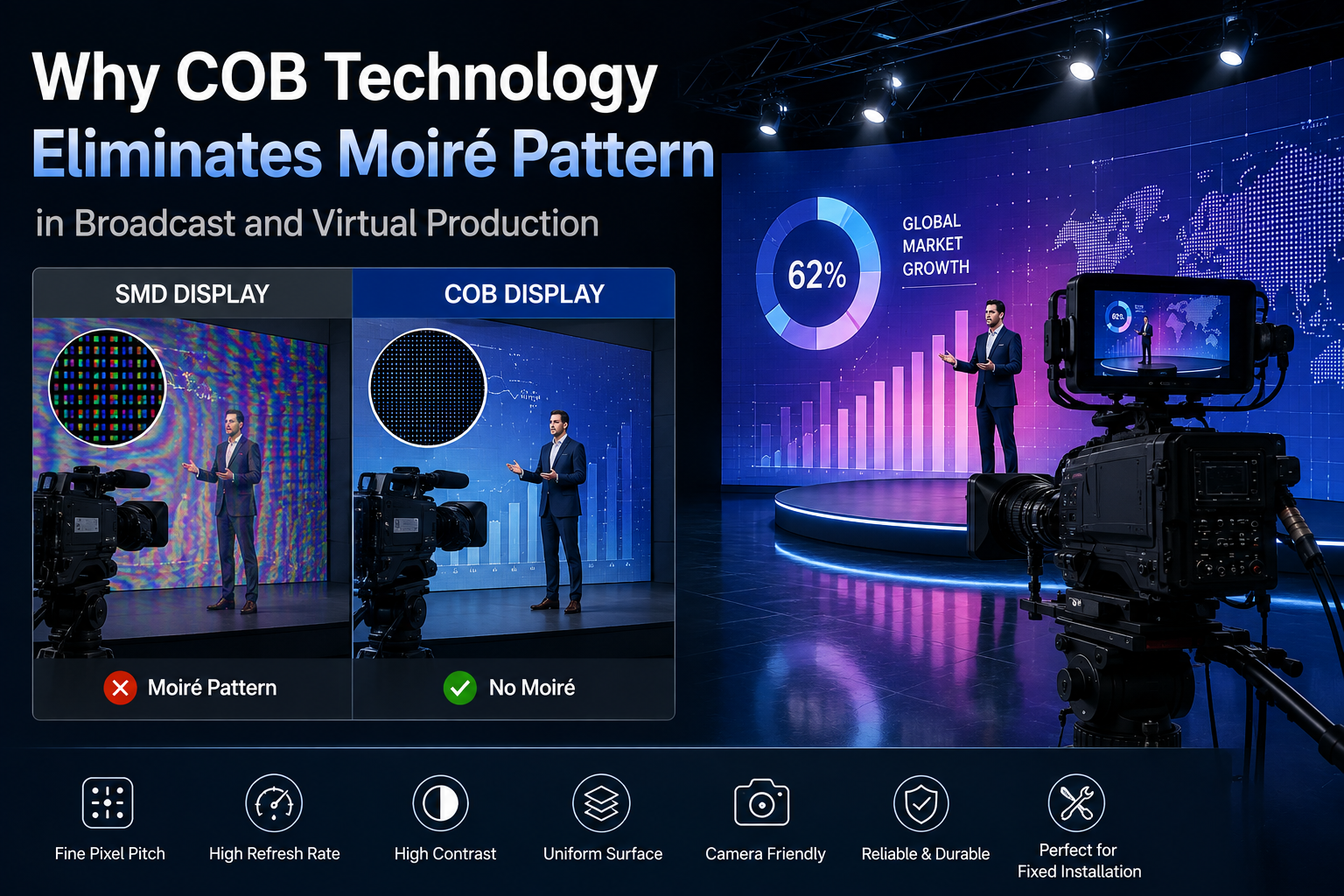
For applications involving cameras or professional video production, a sufficiently high refresh rate can also help reduce flickering and scanning artifacts on camera.
Check Power Consumption
Power consumption affects the long-term operating cost of a large LED display.
When comparing transparent LED film screens, look at both:
- Maximum power consumption
- Average power consumption
Actual power consumption depends on factors such as brightness and displayed content.
For large commercial installations, even a small difference in energy consumption can become significant over time.
Therefore, it is useful to compare energy efficiency alongside display performance.
Consider Maintenance and Serviceability
Maintenance is another important factor that is sometimes overlooked during the purchasing process.
Ask the supplier:
- How are damaged components replaced?
- Is maintenance possible from the front?
- How easy is it to replace a section?
- What is the expected service life?
- Are spare parts available?
- Does the supplier provide technical support?
For commercial storefronts and large buildings, minimizing downtime is important.
A product that is easy to install and maintain can reduce long-term operating costs.
Choose a Reliable Transparent LED Film Supplier
The supplier is just as important as the screen itself.
Before placing an order, evaluate:
Product Quality
Check specifications, product construction, testing standards, and quality control.
Project Experience
Ask whether the supplier has completed similar transparent LED film projects.
Technical Support
A professional supplier should be able to provide guidance on:
- Product selection
- Screen layout
- Installation
- Configuration
- Control systems
- Troubleshooting
Customization
Large projects may require customized dimensions, brightness, pixel pitch, or installation solutions.
Warranty and After-Sales Service
Always understand the warranty terms and after-sales support before purchasing.