LED Screen Rental Guide 2026: How to Choose the Best Rental LED Display for Your Events
Introduction: Why Rental LED Displays Are Essential for Modern Events
In today's event industry, high-quality visual experiences play an important role in attracting audiences and creating memorable events. From live concerts and music festivals to corporate conferences, exhibitions, trade shows, and sporting events, LED displays have become an essential part of modern event production.
Ein Profi LED Screen Rental solution offers flexibility, excellent image quality, easy installation, and reliable performance for different event environments. Compared with traditional projection systems, rental LED displays provide brighter images, seamless video walls, and flexible screen configurations for both indoor and outdoor applications.
However, choosing the right rental LED display is not simply about screen size or price. Pixel pitch, brightness, refresh rate, cabinet design, protection level, maintenance methods, and installation requirements all influence the final performance.
Whether you are an event organizer, AV rental company, stage equipment supplier, or LED display distributor, this guide will help you understand how to choose the best Mietbares LED-Display for your business in 2026.
1. What Is a Rental LED Display?
A rental LED display is a modular LED video screen specifically designed for temporary installations and repeated use. Unlike fixed installation LED displays, rental LED screens are engineered for frequent transportation, quick assembly, disassembly, and flexible configurations.
They are widely used for:
Concerts and music festivals
Corporate events and conferences
Trade shows and exhibitions
Weddings and private events
Sporting events and live broadcasting
Outdoor advertising and promotional activities
Stage backgrounds and entertainment venues
Professional rental LED displays typically feature lightweight die-cast aluminum cabinets, quick-lock systems, modular LED panels, and convenient maintenance structures.
These features allow rental companies to assemble different screen sizes and configurations according to project requirements.
2. Different Types of Rental LED Displays
Before purchasing an LED video wall rental system, it is important to understand the differences between indoor and outdoor rental LED displays.
2.1 Indoor Rental LED Display
An Indoor Rental LED Display is designed for environments where audiences are relatively close to the screen, making image clarity and pixel density particularly important.
Common applications include:
Corporate conferences and meeting rooms
Indoor exhibitions and trade shows
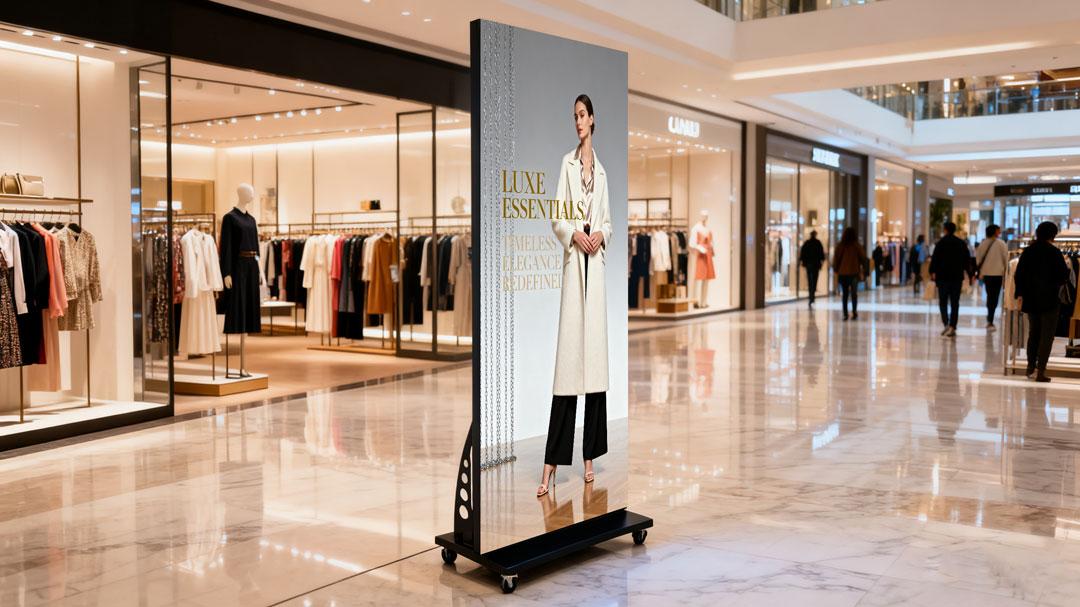
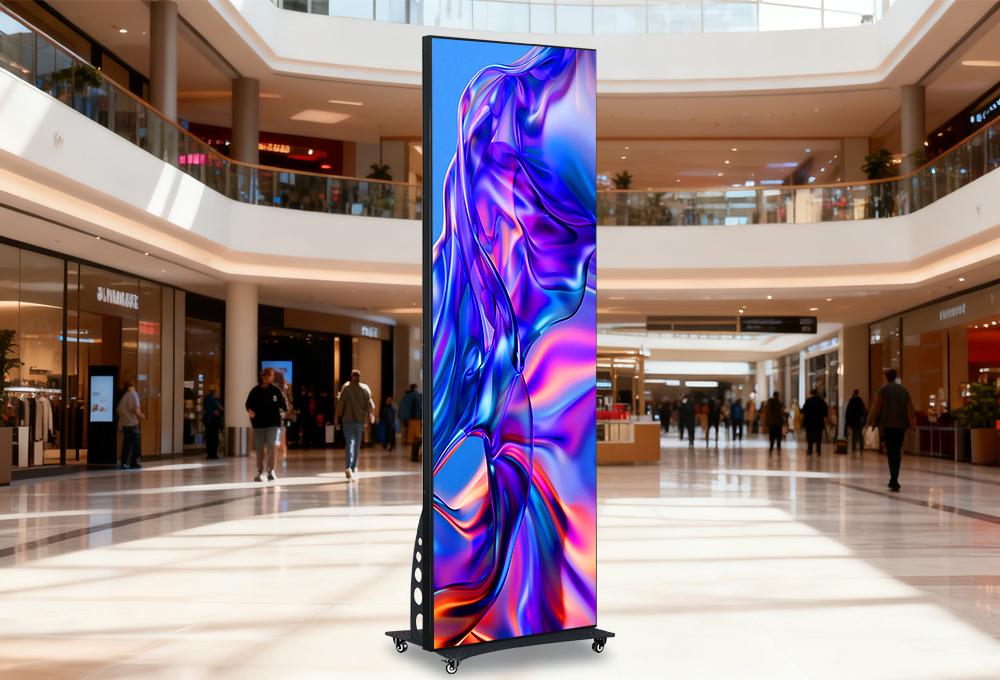
Shopping malls and product launches
Television studios and live broadcasts
Weddings and indoor entertainment events
Key features to consider:
High Resolution: Fine pixel pitches such as P1.9 and P2.6 provide detailed images for close-viewing environments.
Hohe Bildwiederholfrequenz: A high refresh rate helps reduce visible scanning lines and flickering in camera recordings.
Lightweight Cabinet: Lightweight cabinets make transportation, installation, and dismantling easier.
Flexible Installation: Support for flat, curved, and creative screen configurations allows rental companies to serve different event requirements.
Indoor rental LED displays are particularly suitable for projects where image detail, color consistency, and professional visual presentation are important.
2.2 Outdoor Rental LED Display
An Outdoor Rental LED Display is designed to deliver clear and bright images in outdoor environments, including direct sunlight and changing weather conditions.
Typische Anwendungsgebiete sind:
Outdoor concerts and festivals
Sports events and stadium activities
Outdoor advertising and promotional events
Large-scale public gatherings
Roadshows and brand activations
Important features include:
Hohe Helligkeit: Outdoor LED displays generally require higher brightness than indoor screens. Depending on the application and ambient lighting, professional outdoor rental displays may offer brightness levels of approximately 4,500–6,500 nits or higher.
Weather Protection: Suitable IP-rated protection helps safeguard LED modules and electronic components against dust and moisture.
Durable Cabinet Structure: Strong cabinet construction and reliable locking systems support frequent installation and transportation.
Stable Performance: Reliable power and signal connections are important for continuous operation during long events.
When selecting an outdoor rental LED display, consider brightness, IP protection, structural safety, cooling, and the local weather conditions.
3. P1.9 vs P2.6 Rental LED Screen: Which Pixel Pitch Should You Choose?
Pixel pitch is one of the most important factors when selecting a rental LED screen.
It refers to the distance between the centers of two adjacent LED pixels, measured in millimeters. A smaller pixel pitch means higher pixel density and generally provides sharper images at shorter viewing distances.
Two popular options for indoor event applications are the P1.9 Rental LED Screen Und P2.6 Rental LED Screen.
P1.9 Rental LED Screen
A P1.9 rental LED screen is an excellent choice for professional indoor events that require high image detail and close viewing distances.
Main advantages:
Higher pixel density for detailed images
Suitable for close-viewing applications
Excellent for corporate conferences and exhibitions
Ideal for premium product launches and studio environments
Provides detailed text, graphics, and video content
Typische Anwendungsbereiche:
High-end corporate events
Conference backgrounds
Indoor exhibitions
Television studios
Premium brand presentations
For rental companies targeting high-end indoor projects, P1.9 can provide a competitive advantage in applications where image clarity is a priority.
P2.6 Rental LED Screen
A P2.6 rental LED screen offers a practical balance between image quality, viewing distance, and equipment investment.
Main advantages:
Good image quality for general indoor events
More economical than finer-pitch alternatives
Suitable for medium and large event screens
Flexible configurations for different stage designs
Attractive option for frequent rental applications
Typische Anwendungsbereiche:
Concert stages
Weddings and celebrations
Corporate events
Trade shows
Indoor entertainment venues
P2.6 is a popular consideration for rental businesses looking for a versatile display solution that can serve a wide range of event projects.
P1.9 vs P2.6: Technical Comparison
| Spezifikation | P1.9 Rental LED | P2.6 Rental LED |
|---|---|---|
| Pixelabstand | 1.9 mm | 2.6 mm |
| Pixeldichte | Höher | Untere |
| Image Detail | Finer | Gut |
| Nahaufnahme | More suitable | Suitable depending on distance |
| Typical Application | Premium indoor events | General indoor events |
| Investment | Generally higher | Generally more economical |
Note: Actual specifications, brightness, refresh rate, cabinet dimensions, and prices depend on the LED product configuration and manufacturer.
Which One Is Better?
Choose P1.9 if your projects mainly involve close viewing, high-resolution content, and premium indoor events.
Choose P2.6 if you need a versatile rental screen for different event types and want to balance image quality with equipment investment.
The best pixel pitch should always be determined by viewing distance, screen size, event environment, and customer requirements.
4. Key Features to Look for in a Professional Rental LED Display
A professional rental LED display should offer more than good image quality. Its mechanical structure, installation efficiency, and long-term reliability are equally important.
4.1 Lightweight Die-Cast Aluminum Cabinet
The cabinet is one of the most important components of a rental LED display.
A lightweight die-cast aluminum cabinet offers several advantages:
Easier transportation
Faster installation and dismantling
Reduced structural loading
Better cabinet alignment
Improved operational efficiency
Lightweight construction is particularly valuable for rental companies that handle frequent events and transportation.
4.2 Quick Locking System
A reliable quick-lock system allows technicians to connect LED cabinets efficiently and accurately.
It helps:
Reduce installation time
Improve assembly efficiency
Maintain consistent cabinet alignment
Support different screen configurations
For large-scale events, installation efficiency can directly affect labor costs and project schedules.
4.3 Front and Rear Maintenance
Maintenance accessibility is another important consideration.
Front maintenance allows technicians to access certain components from the front of the display, while rear maintenance provides access through the back of the cabinet.
Depending on the cabinet design, convenient maintenance can reduce repair time and improve operational efficiency.
4.4 High Refresh Rate and Image Performance
Professional rental LED displays should deliver stable images for both live audiences and camera recording.
Wichtige Spezifikationen umfassen:
Bildwiederholfrequenz
Grayscale performance
Color consistency
Brightness adjustment
Contrast performance
A refresh rate of 3,840 Hz is a common specification in professional rental LED display configurations, although actual performance depends on the receiving system, driver IC, and configuration.
4.5 Curved and Creative LED Screen Configurations
Modern events increasingly require creative stage designs.
Professional rental LED cabinets may support different installation angles and configurations, including:
Concave and convex curved screens
90-degree corner installations
Cylindrical LED screens
Creative stage backgrounds
Multi-screen combinations
These capabilities allow rental companies to provide more customized solutions and expand their project opportunities.
5. Common Applications of LED Video Wall Rental
Die Nachfrage nach LED Video Wall Rental continues to grow across different event industries because modular LED technology offers flexible screen sizes, excellent brightness, and seamless visual presentation.
Concerts and Music Festivals
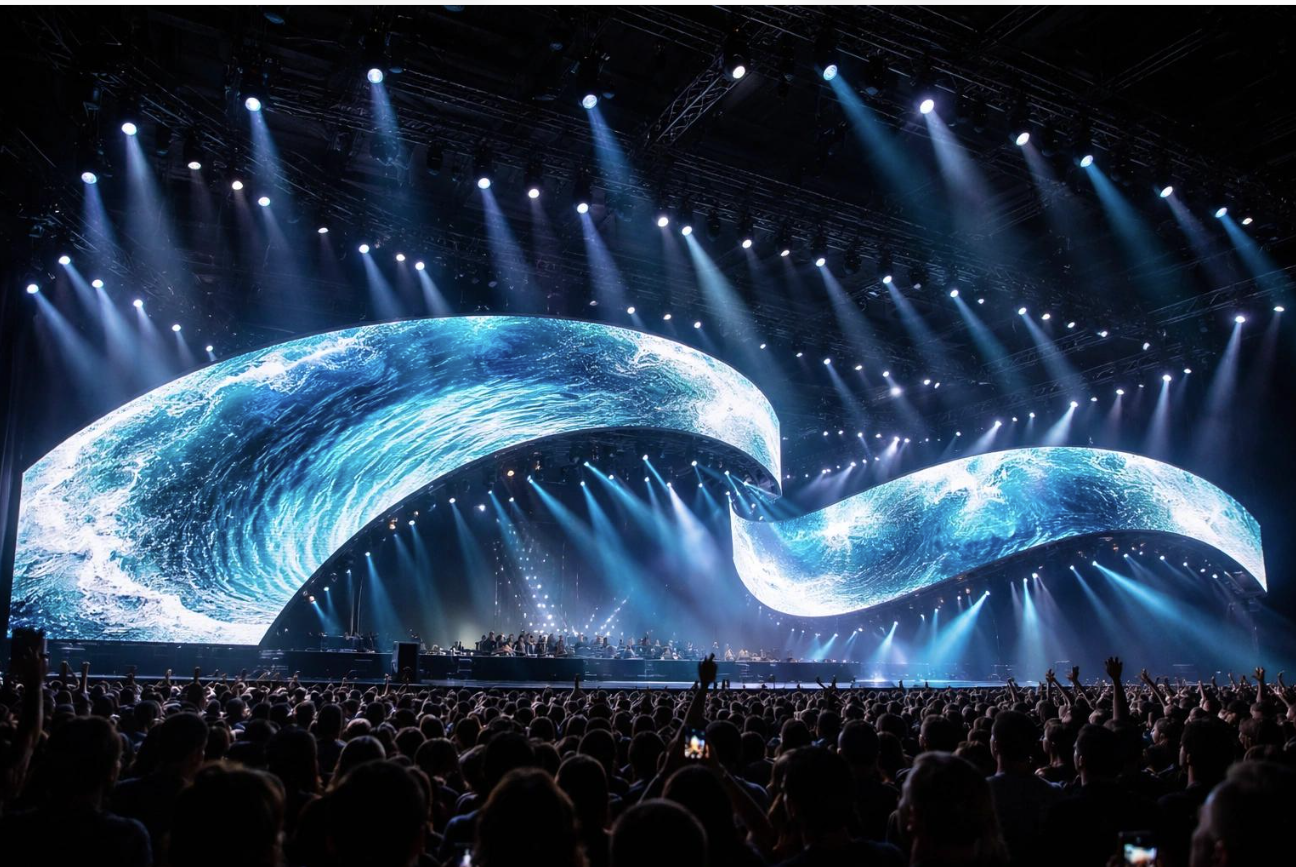
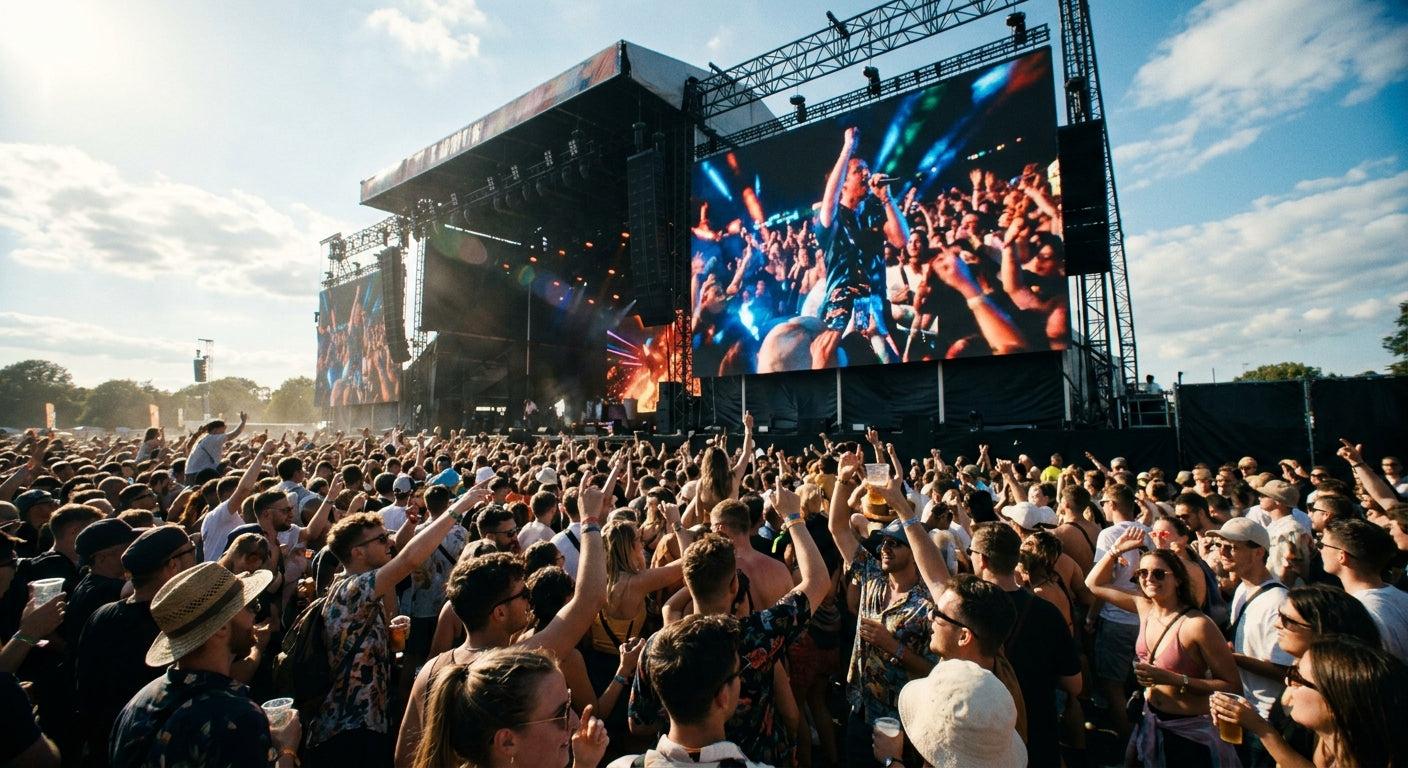
Large LED video walls create immersive visual experiences for audiences. They are commonly used as stage backgrounds, side screens, and extended visual displays.
Outdoor rental LED screens are particularly useful for large concerts and music festivals.
Corporate Events and Conferences
Indoor rental LED displays provide professional presentation backgrounds for corporate meetings, conferences, seminars, and product launches.
Fine-pitch screens such as P1.9 are especially suitable for environments where audiences need to view detailed content.
Trade Shows and Exhibitions
At exhibitions, LED video walls help brands attract attention, showcase products, and communicate promotional messages.
Modular rental cabinets also make it easier to create different booth designs.
Weddings and Private Events
Rental LED screens are increasingly used for wedding backgrounds, live video displays, photographs, and entertainment content.
Flexible screen sizes and curved configurations allow event designers to create customized visual environments.
Sports Events and Live Broadcasting
Large LED displays provide live match information, replays, advertisements, and event content.
For outdoor sports applications, brightness and environmental protection are especially important.
6. How to Choose the Right Rental LED Screen for Your Project
Before purchasing a rental LED display, consider the following five factors.
1. Application Environment
Determine whether the screen will be used indoors or outdoors. Indoor and outdoor displays have different brightness, protection, and structural requirements.
2. Viewing Distance
Select the pixel pitch according to the audience's viewing distance. P1.9 is more suitable for close viewing, while P2.6 may be sufficient for applications with a greater viewing distance.
3. Screen Size and Configuration
Calculate the required screen width and height according to the stage design, venue dimensions, and content requirements.
4. Transportation and Installation
Consider cabinet weight, flight case design, quick-lock systems, and installation efficiency.
5. Supplier Experience and After-Sales Support
Choose a manufacturer that can provide technical documentation, product testing, spare parts, technical support, and reliable delivery.
A professional supplier should also be able to recommend suitable configurations based on your actual rental business requirements.
7. How to Calculate the ROI of a Rental LED Display Business
For rental companies, purchasing LED screens is an investment rather than simply an equipment expense.
The return on investment (ROI) depends on equipment cost, rental frequency, rental prices, operating expenses, and equipment utilization.
A simplified calculation is:
Monthly Gross Rental Revenue = Screen Rental Price per Event × Number of Events per Month
Estimated Payback Period = Initial Equipment Investment ÷ Monthly Net Operating Profit
For example, a rental company may consider the following factors:
Initial LED screen purchase cost
Number of rental events each month
Rental price per project
Transportation and labor costs
Maintenance and replacement expenses
Equipment utilization rate
A versatile rental LED display that can serve multiple event types may help improve equipment utilization and create more revenue opportunities.
Choosing the right pixel pitch and cabinet configuration is therefore important for balancing initial investment and long-term business returns.
8. Why Choose a Professional Rental LED Display Manufacturer?
Choosing the right LED display manufacturer is essential for rental companies, distributors, and event production businesses.
A reliable manufacturer should offer:
Complete Product Solutions: Different pixel pitches and indoor and outdoor rental LED display options.
Stable Manufacturing Quality: Consistent production standards and quality inspection procedures.
Customization Capabilities: Flexible cabinet designs, screen configurations, and project-specific solutions.
Technical Support: Product documentation, installation guidance, and troubleshooting assistance.
Reliable Delivery: Production planning and quality control to support project schedules.
Working directly with an experienced manufacturer can also help rental businesses obtain more competitive product solutions and build long-term supply relationships.
9. Conclusion: Invest in the Right Rental LED Display for Long-Term Growth
The rental LED display market offers opportunities for event production companies, AV rental businesses, and professional LED display distributors.
Whether you choose a P1.9 Rental LED Screen for premium indoor applications or a P2.6 Rental LED Screen for versatile event projects, the right solution should balance image quality, installation efficiency, durability, and overall investment.
For outdoor projects, brightness, weather protection, and cabinet reliability should also be carefully evaluated.
By understanding pixel pitch, cabinet features, application requirements, and supplier capabilities, you can make a more informed purchasing decision and build a competitive rental LED display business.
Looking for a reliable rental LED display manufacturer?
Contact our team to explore professional indoor and outdoor rental LED display solutions for your next project.
10. Frequently Asked Questions (FAQ)
Q1: What is the best pixel pitch for a rental LED screen?
P1.9 and P2.6 are popular choices for indoor rental applications. P1.9 is more suitable for close viewing and high-detail content, while P2.6 offers a balance between image quality and equipment investment. The best choice depends on viewing distance and project requirements.
Q2: What is the difference between indoor and outdoor rental LED displays?
Indoor rental LED displays prioritize image detail and close-viewing performance. Outdoor rental LED displays generally require higher brightness, weather protection, and more robust structural designs.
Q3: What brightness is recommended for an outdoor rental LED display?
The required brightness depends on ambient lighting and installation conditions. Many professional outdoor rental LED displays offer approximately 4,500–6,500 nits or higher. Direct sunlight applications may require higher brightness.
Q4: Is a P1.9 rental LED screen better than P2.6?
P1.9 provides higher pixel density and finer image detail, making it suitable for close viewing. P2.6 is generally more economical and suitable for a wider range of indoor rental projects. Neither is universally better; the right choice depends on the application.
Q5: Can rental LED displays be used for curved stages?
Yes. Many professional rental LED cabinets support concave and convex curved installations. The available curvature depends on the cabinet structure and locking system.
Q6: How long does it take to install a rental LED video wall?
Installation time depends on screen size, cabinet quantity, structural design, site conditions, and the experience of the installation team. Modular cabinets and quick-lock systems can help improve installation efficiency.
Q7: What should I check before buying rental LED displays?
Check pixel pitch, brightness, refresh rate, cabinet weight, locking system, maintenance method, protection rating, spare parts availability, warranty, and manufacturer support.
Q8: Is buying rental LED screens a good investment?
Rental LED screens can be a good investment for businesses with regular event projects and sufficient equipment utilization. Profitability depends on purchasing costs, rental demand, pricing, operating expenses, and maintenance.